If you live in the “Mile Square City,” you are no stranger to the sight of orange traffic cones, heavy excavators, and the steady hum of construction crews. Hoboken is currently undergoing one of the most ambitious infrastructure overhauls in its history. While these projects are designed to end the era of frequent main breaks, the process of modernizing a century-old network is a massive hydraulic undertaking.
When the city and its water partner, Veolia North America, announce large-scale water work on your block, it isn’t just the traffic that changes. The very behavior of your home’s buildings plumbing will be affected. Understanding the phases of these projects—and how they impact your water—is the best way to navigate the “growing pains” of a city in transition.
Phase 1: The “Valve Mapping” and Preparatory Shocks
Before a single trench is dug, engineers must map out the local grid. This often involves opening and closing various valves in the street to determine how water can be redirected while the main pipe is replaced.
For residents, this phase often results in “phantom” water quality issues. When a valve that hasn’t been moved in decades is suddenly “throttled,” it sends a shockwave through the local city infrastructure. This shockwave can loosen “tuberculation”—the internal mounds of rust that have grown inside the old cast-iron pipes over the last 100 years.
During this phase, expect brief, unpredictable bouts of brown or yellow water. The city is essentially “stress-testing” the neighborhood’s hydraulic limits before the real work begins.
Phase 2: The Temporary Bypass (The “Blue Pipe” Phase)
To keep your taps running while the old main is excavated and replaced, crews will often install a “temporary bypass.” These are the blue, above-ground pipes you see running along the curb line. Your building’s service line is disconnected from the street main and “tapped” into this bypass.
While the bypass ensures you have water, it significantly changes your water’s profile:
- Temperature Spikes: Because these pipes sit on the hot asphalt in the summer or are exposed to the cold in the winter, the water temperature at your tap will fluctuate more than usual.
- Pressure Sinks: These temporary lines are often smaller in diameter than the permanent mains. If you live in a high-rise, your building’s booster pumps may have to work harder to “inhale” enough volume, leading to the “sputtering” taps we address in our faq.
- The “Garden Hose” Taste: While the pipes are made of food-grade materials, the increased “residence time” and exposure to the sun can give the water a slight plastic or mineral taste that differs from the usual deep-rock supply.
Phase 3: Excavation and Vibration Scouring
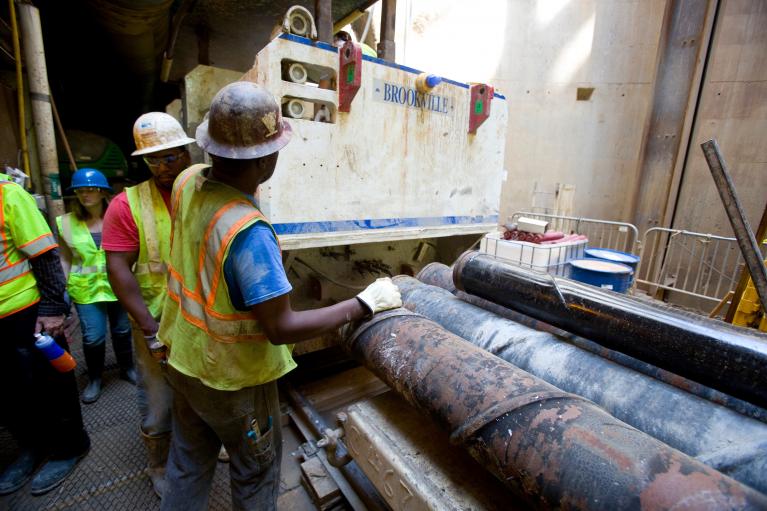
This is the loudest and most physically disruptive phase. As crews break through the street to reach the old pipes, the vibrations from jackhammers and backhoes travel through the soil and into your building’s foundation.
These vibrations act like a percussive hammer on your internal pipes. Even if the street water is clear, the shaking of your building’s risers can “knock” loose internal sediment. This is why we often see a spike in reports of “grit” in faucet aerators during this phase. We track these localized construction impacts on our blog to help neighbors correlate their plumbing quirks with the work outside.
Phase 4: The Pressure Rebound and Final Flush
Once the new, cement-lined ductile iron pipe is installed and tested, the bypass is removed and your building is reconnected to the permanent main. This is the “high-risk” moment for your plumbing.
When the new main is pressurized, it often carries pockets of trapped air. This can cause a “water hammer” effect—a loud banging in your walls when the pressure returns. Furthermore, the final “rebound” of pressure can push a final “slug” of construction sediment into your home’s intake.
A Resident’s Survival Guide to Large-Scale Work
To protect your appliances and ensure your water stays clear during these projects, follow this protocol:
- Bypass Your Filters: If you have an under-sink or whole-house filter, turn the bypass valve during the “reconnection” phase. A single slug of construction grit can destroy a brand-new $100 carbon filter in seconds.
- The Bathtub Flush: After any day of heavy excavation on your block, run your cold water in the bathtub for 15 minutes. This is the highest-flow fixture in your home and the best way to “purge” the service line.
- Check Your PRV: If you live on a lower floor, ensure your “Pressure Reducing Valve” is functioning. The new, modernized urban water systems often operate at a higher, more consistent pressure than the old, leaky grid, which can strain old fixtures.
- Avoid Hot Water: Never run your dishwasher, washing machine, or hot water tap if you see any discoloration. Pulling sediment into your water heater can lead to “rumbling” and permanent damage.
Conclusion: The Price of a Permanent Solution
The large-scale water work in Hoboken is a necessary evolution. We are trading a few weeks of “blue pipes” and brown water for a century of reliability. By understanding that these disruptions are mechanical side-effects of “scouring” and “vibration,” you can manage your home’s water with confidence.
Hoboken’s water is safe, but its journey through a construction zone is a rocky one. If your water doesn’t clear up long after the bypass has been removed, or if your pressure remains consistently low, it may indicate a building-side blockage. Reach out via our contact page so we can help you determine if the issue is part of the city’s work or a specific problem with your building’s tap.