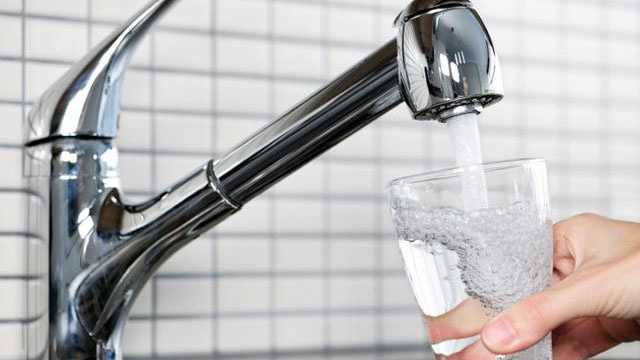
Living in Manhattan is an exercise in navigating density. We feel it on the crowded subway platforms at Union Square, in the vertical race of the Midtown skyline, and in the sheer volume of humanity packed into every square mile. But there is another kind of density that defines our daily lives—one that remains entirely invisible until you turn on your kitchen tap and find a sudden drop in pressure or a strange, metallic tang in your morning coffee.
Manhattan sits atop one of the most complex, antique, and tightly packed water distribution networks in the world. Unlike suburban systems that sprawl across horizontal planes, our grid is a high-pressure, vertical labyrinth. This extreme density is exactly why urban water systems in the city are prone to sudden shifts that can baffle even long-term residents.
The “Path of Least Resistance” in a High-Demand Grid
To understand why your shower pressure might vanish at 7:45 AM, you have to visualize the street main as a high-pressure river. Every building on your block is “drinking” from that same river simultaneously.
In a less dense environment, the “draw” from one house doesn’t significantly impact the next. But in Manhattan, specifically in high-density pockets like the Financial District or the Upper West Side, the demand is gargantuan. When a 50-story residential tower activates its massive intake valves, it creates a localized drop in pressure in the street main.
Water follows the path of least resistance. If a skyscraper’s powerful booster pumps are “tugging” at the water in the street, a neighboring five-story brownstone—which relies solely on street pressure—will experience a sudden dip. This is a common theme in our water quality issues logs: the taller your neighbor, the more volatile your pressure.
Velocity Scouring: The Cause of the Metallic Shift
Many Manhattanites have experienced “The Metallic Morning”—that moment when the tap water tastes like a handful of pennies. This shift in taste is rarely about the source water from the Catskills; it is about the physics of the pipes.
Because our city infrastructure is comprised of miles of unlined cast-iron mains dating back to the early 20th century, the pipes have a natural layer of internal oxidation, often called “tuberculation.” Under normal, steady flow, this rust stays stuck to the pipe walls.
However, in a dense grid, the direction and speed (velocity) of the water change constantly. If a nearby fire hydrant is opened for a “flush” or if a major building shuts down for a buildings plumbing repair, the water in the street must find a new route. This sudden “reversal” or increase in speed acts like a high-pressure broom, scouring the rust off the pipe walls and carrying it into your home. This is the primary reason for the sudden “earthy” or “iron” taste that appears out of nowhere.
The “Utility Junk Drawer” and Thermal Gain
Manhattan’s subterranean world is a “junk drawer” of competing utilities. Water mains are packed into narrow trenches alongside:
- High-voltage electrical lines.
- Fiber-optic cables.
- Ancient steam pipes.
Steam pipes are the silent disruptors of water taste. Manhattan has the largest district steam system in the world. When a water main is buried in close proximity to a leaking or poorly insulated steam line, the soil around it heats up. This “thermal gain” warms the “cold” water in the street main.
Warmer water is more reactive. It is more likely to “off-gas” the chlorine used for disinfection, leading to a stronger medicinal smell. It also allows the natural minerals in the water to become more “fragrant” on the palate. If your cold water feels tepid in the middle of February, you are likely tasting the result of Manhattan’s utility density.
The “Dead End” and the Terminal Tip
Manhattan’s grid is generally designed as a series of loops to keep water moving. But as the island narrows—particularly in neighborhoods like Battery Park City or the Seaport—the grid becomes more linear.
In these “end-of-the-line” pockets, water can become stagnant. If a building is at low occupancy or if there isn’t enough “draw” at the tip of the island, the water sits in the pipes longer, absorbing more of the metallic characteristics of the old iron mains. This is why residents at the very tip of Manhattan often report different water quality issues than those living in the heart of the Midtown grid.
Mechanical “Water Hammer” in High-Rises
For those living in modern glass towers, the shifts are often mechanical. To reach the 40th floor, water must be pumped into “house tanks” or “suction tanks.” When these massive valves shut off once the tank is full, it creates a shockwave known as a “water hammer.”
In a dense neighborhood, this shockwave can travel back out into the street and into the plumbing of the building next door. If you hear a loud “thump” in your walls every time your neighbor’s building finishes a pumping cycle, you are experiencing the kinetic reality of Manhattan’s density. You can read more about how to mitigate these sounds in our faq section.
How to Manage the Manhattan “Swing”
While you cannot personally repave the city’s infrastructure, you can protect your home from these sudden shifts:
- Monitor the Timing: If your pressure drop happens at the same time every day, it is a demand issue. Talk to your super about the building’s Pressure Reducing Valve (PRV).
- The “Slow Cold Flush”: If you notice a metallic taste, run your cold water at a moderate flow for 2-3 minutes. Do not use the hot water, as it will pull that sediment into your water heater.
- Aerator Maintenance: Manhattan’s dense grid kicks up a lot of “pipe scale.” Unscrew the screens on your faucets every three months and rinse out the grit to maintain consistent flow.
- Stay Informed: We track localized main breaks and hydrant flushes daily on our blog. Knowing that there is a repair three blocks away can explain a lot about the glass of water in your hand.
Conclusion: The Price of a Vertical City
The sudden shifts in taste and pressure we experience in Manhattan are the physical symptoms of a city that refuses to stop growing. We are living atop a 19th-century foundation that is being asked to perform 21st-century miracles every single morning.
The density that makes Manhattan the “center of the world” is the same density that makes its water grid so temperamental. By understanding the physics of the grid, we can move from frustration to preparation. If you have noticed a persistent change in your water that doesn’t seem to clear, we want to hear about it. Your data helps us map the stress points of the city. Reach out via our contact page to share your experience.