Brooklyn contains some of New York City’s oldest water infrastructure. Many neighborhoods are still served by cast-iron mains installed decades ago, long before modern demand levels and construction density. These aging pipes play a central role in recurring discoloration reported by residents.
Over time, cast-iron pipes develop internal layers of rust and mineral buildup. Under stable conditions, these layers remain adhered to pipe walls. However, Brooklyn’s active construction environment and frequent utility work regularly disturb flow conditions.
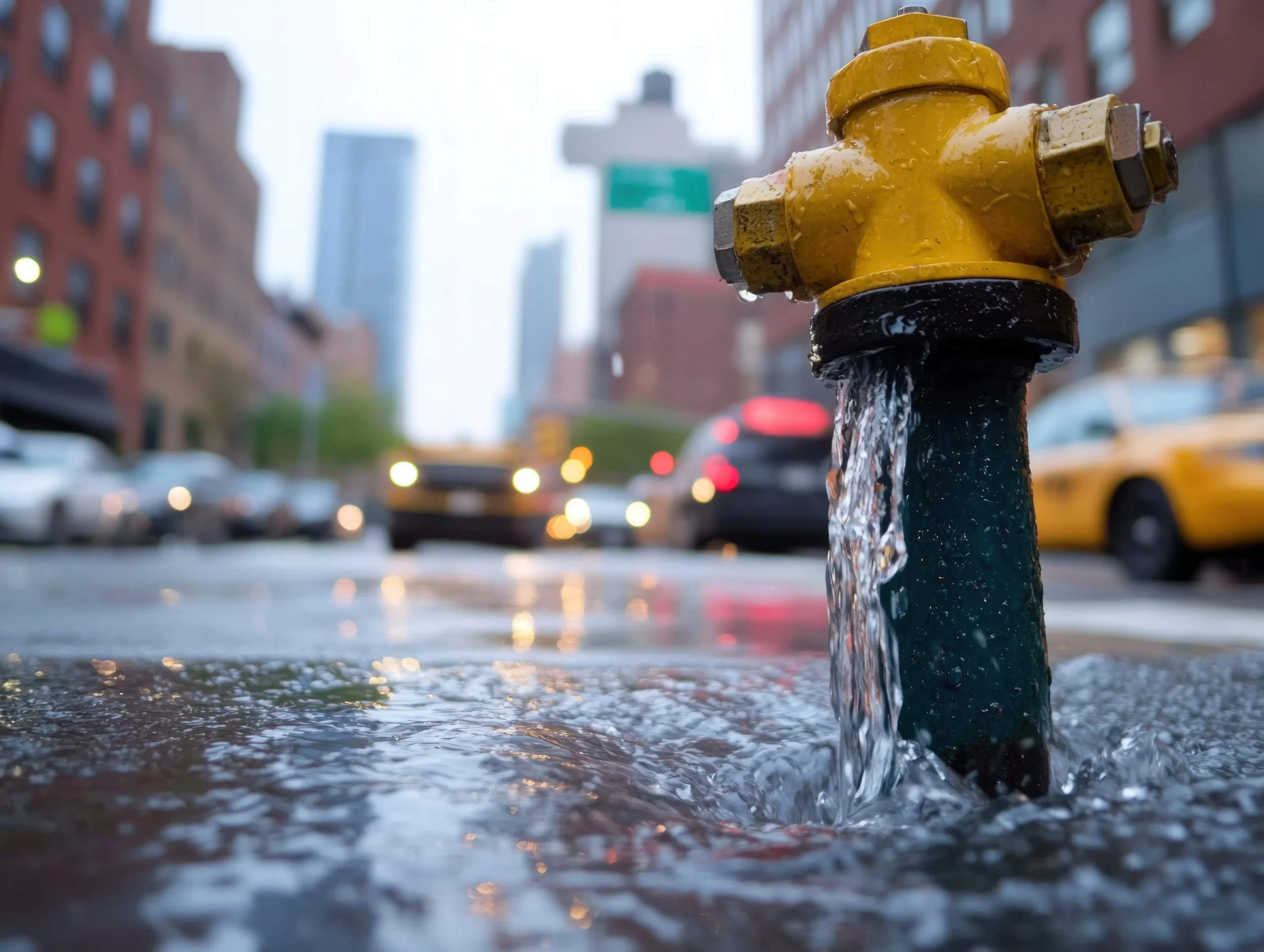
Hydrant use, nearby repairs, or valve operations can increase velocity or reverse flow direction, dislodging sediment and carrying it downstream. This material appears at the tap as brown, yellow, or orange water, often localized to specific blocks or buildings.
Importantly, discoloration does not mean contamination. It reflects physical movement inside aging infrastructure rather than a failure of treatment. Brooklyn’s varied building ages further amplify these effects, as older service lines and internal plumbing interact with city mains.
Brooklyn’s discoloration events are a predictable outcome of maintaining historic infrastructure in a constantly evolving urban landscape — not a sign of declining water safety.