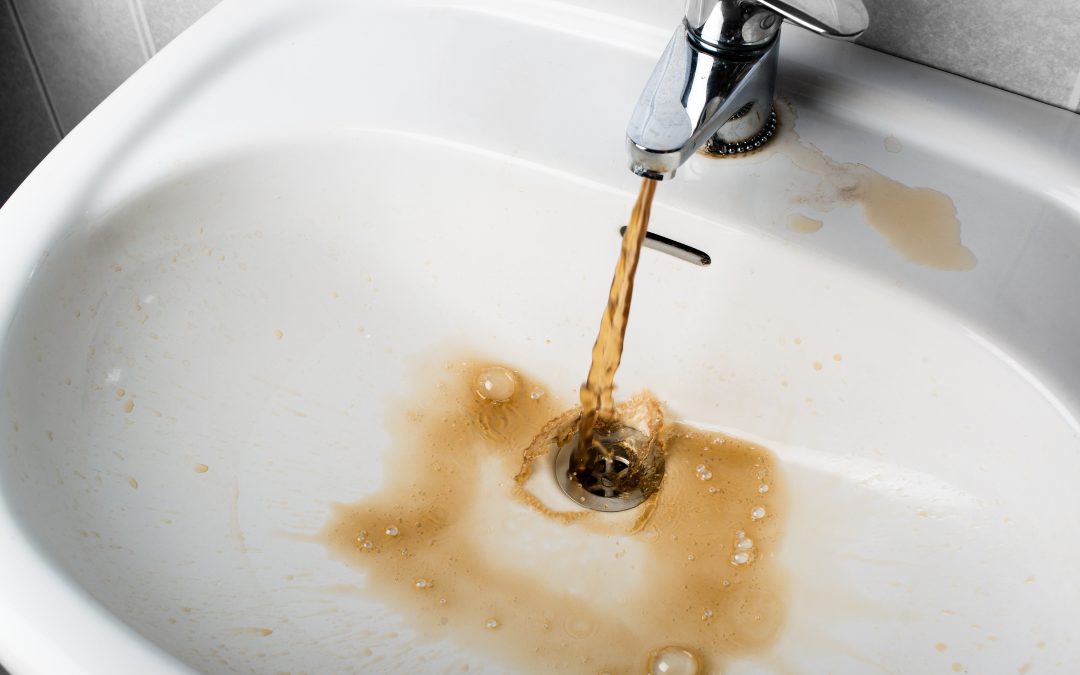
It is a ritual performed by thousands of New Yorkers every morning: you turn on the kitchen tap to fill the kettle, and for a split second, the water runs a faint amber or releases a puff of dark, gritty particles before clearing up. By the time you’re pouring your second cup of coffee, the water is crystal clear again, appearing perfectly normal for the rest of the day.
This phenomenon—the “morning slug”—is one of the most common water quality issues reported across the five boroughs. Because it disappears so quickly, many residents dismiss it as a minor quirk of living in an old city. However, the fact that it only happens first thing in the morning is a significant diagnostic clue. It tells a story of what is happening inside your buildings plumbing while the city sleeps.
The Science of Stagnation
The primary reason sediment appears in the morning is “stagnation.” In a city that never sleeps, the water system actually does—at least inside your pipes. Between 11:00 PM and 6:00 AM, water usage in a typical residential building drops to near zero.
When water sits motionless for six to eight hours, it interacts chemically with the pipe walls. New York City’s city infrastructure relies on a vast network of cast-iron and galvanized steel pipes. While the water leaving the reservoirs is pristine, the “service lines” and internal “risers” in older buildings often have a layer of internal oxidation known as tuberculation.
During the day, the constant flow of water keeps these particles pressed against the pipe walls or flushed out in tiny, invisible increments. At night, the lack of movement allows microscopic flakes of iron oxide (rust) and calcium deposits to settle at the low points of your plumbing or right behind your faucet valve. When you turn the tap on in the morning, the sudden rush of pressure acts like a broom, sweeping all that overnight accumulation out at once.
The “Galvanic” Ghost in the Walls
If you live in a pre-war apartment in Brooklyn or a classic tenement in Manhattan, your morning sediment might be caused by mismatched metals. Many older NYC buildings have undergone “patchwork” repairs over the decades. You might have original galvanized steel pipes connected to newer copper lines.
When two different metals touch in the presence of water, a process called galvanic corrosion occurs. Essentially, the pipes act like a weak battery, and the base metal (usually the iron or steel) begins to dissolve. This reaction doesn’t stop just because you aren’t using the water. In fact, without the flow of water to wash away the byproduct, the corrosion concentrated at these joints builds up overnight. The “puff” of orange grit you see in the morning is often the physical evidence of your pipes slowly eating themselves at the junctions.
The Hot Water Tank Trap
Sometimes, the sediment isn’t coming from the pipes at all, but from the bottom of your water heater. Most NYC apartment buildings use large central boilers or “direct-fired” water heaters. Over years of service, minerals like calcium and magnesium—which are naturally present in the Catskill/Delaware supply—settle at the bottom of these tanks, creating a layer of “mud.”
During the night, this sediment settles heavily. When the morning rush begins and dozens of tenants start showering simultaneously, the massive “draw” on the tank stirs up that bottom layer of silt. If you find that the morning sediment only appears when you turn on the hot tap, the culprit is almost certainly the building’s water heating system rather than the street-side urban water systems.
Why the “Morning Flush” is Essential
While the NYC Department of Environmental Protection (DEP) ensures the water in the street mains is safe, they cannot control what happens once that water enters a private building. This is why health officials often recommend a “first draw” flush.
If your building has legacy lead “goosenecks” or lead-soldered copper joints, the lead levels in the water can rise slightly during those hours of overnight stagnation. By running the water until it feels noticeably colder, you are flushing out the water that has been sitting in your building’s internal pipes and bringing in “fresh” water directly from the city’s reinforced concrete or lined iron mains. We discuss this further in our faq regarding old building safety.
Identifying the Source: A Simple Test
If you’re tired of the morning grit, you can perform a simple process of elimination to find the source:
- The Faucet Test: If the sediment only appears at one specific sink (like the bathroom) but not the kitchen, the problem is likely a corroding valve or a “branch line” specific to that room.
- The Aerator Check: Unscrew the aerator (the mesh screen) at the end of your faucet. If it’s filled with blue, green, or white pebbles, you have a failing “dip tube” in a water heater or significant mineral scaling. If the particles are red, brown, or black, you are looking at iron rust from the city infrastructure or building risers.
- The Temperature Test: As mentioned, if it only happens with hot water, call your super—the boiler needs a flush.
How to Protect Your Fixtures
Morning sediment isn’t just an eyesore; it’s abrasive. Over time, those tiny particles of rust act like sandpaper on the rubber seals and ceramic discs inside your high-end faucets. This is a leading cause of the “slow drip” that develops in many New York apartments.
To mitigate the impact, we suggest checking our blog for updates on neighborhood-wide flushing events. Additionally, installing a simple “point-of-use” filter under your kitchen sink can catch those overnight particles, ensuring your morning glass of water is as clear as the city intended.
Conclusion
The “morning slug” of sediment is a physical reminder that we live in a living, breathing museum of engineering. Our water travels through a mix of 19th-century iron and 21st-century technology. While it is rarely a cause for health alarms, it is a signal that your building’s plumbing is reaching an age where it requires more attention.
By understanding that stagnation is the root cause, you can take control of your water quality with a simple 30-second flush every morning. If the sediment persists throughout the day or changes color significantly, it may indicate a larger break in the local grid. In those cases, feel free to reach out via our contact page so we can help you determine if the issue is building-wide or neighborhood-wide.