Living in New York City means living in a constant state of renewal. While most residents focus on the luxury towers rising in Downtown Brooklyn or the renovations of historic Upper West Side brownstones, the most critical upgrades are often happening six feet below the pavement. When the orange barrels and heavy excavators arrive on your street for a water main replacement, it marks a significant modernization of our aging city infrastructure.
For the average New Yorker, this process can feel like a chaotic intrusion of noise, dust, and disrupted service. However, understanding the mechanics of a water main project—and how it interacts with your buildings plumbing—can help you navigate the weeks of construction with minimal stress. Here is a comprehensive guide on what to expect when the city decides it’s time to swap out the 19th-century iron beneath your feet.
Phase 1: The Preparatory “Mark-Outs” and Test Pits
Before a single shovel hits the dirt, you will notice a flurry of activity. Crews from the NYC Department of Design and Construction (DDC) or private contractors will begin spraying colorful lines on the asphalt. These “mark-outs” identify existing gas lines, electric conduits, and fiber optic cables.
The crew will then dig “test pits”—small, targeted holes—to confirm the depth and condition of the existing pipes. This is a critical stage because many of NYC’s urban water systems are so old that the original hand-drawn maps are no longer accurate. During this phase, you may experience minor traffic shifts, but your water service should remain completely normal.
Phase 2: Trenching and the “Temporary Bypass”
Once the layout is confirmed, the real work begins. To ensure that your building has water while the old main is being ripped out and the new one is installed, the contractor will set up a “temporary bypass” system.
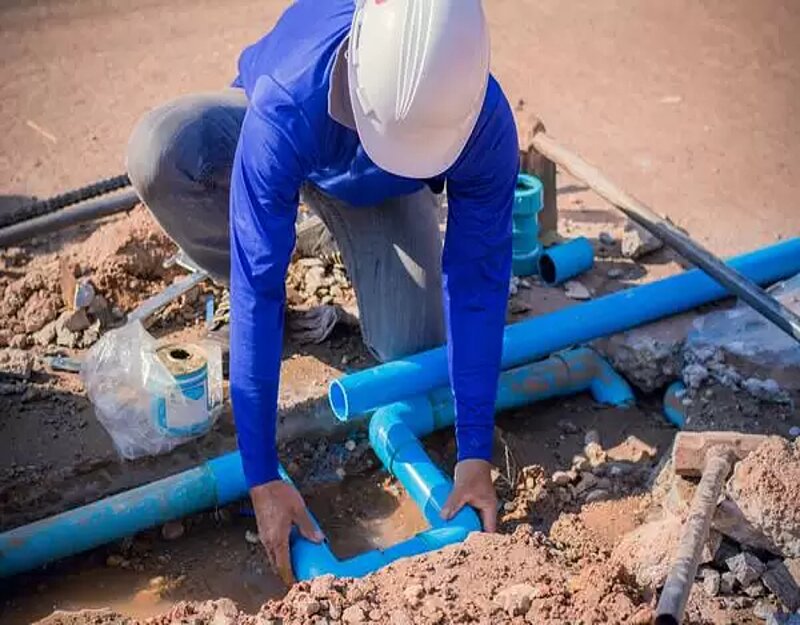
You will see blue pipes—usually four to eight inches in diameter—running along the curb or sidewalk. Small hoses will connect these blue pipes to the fire hydrants and directly into the service lines of each building.
What to expect during the bypass:
- Pressure Fluctuations: Because the bypass pipes are often smaller than the permanent mains, you might notice a slight dip in pressure during peak morning hours.
- Temperature Shifts: Unlike the permanent mains buried deep underground, the bypass pipes are closer to the surface (or even above ground). In the summer, your “cold” water may feel lukewarm; in the winter, it may feel exceptionally icy.
- Aesthetic Changes: The act of switching your building from the old main to the bypass can stir up sediment, leading to temporary water quality issues like yellow or brown water.
Phase 3: The Main Event—Installation and Disinfection
With the neighborhood on the bypass, the crew begins the heavy lifting. They will excavate a long trench down the center of the street. The old, unlined cast-iron pipe—often brittle and encrusted with decades of mineral scale—is removed. In its place, the city installs modern “ductile iron” pipe, which is lined with a smooth cement mortar to prevent corrosion and improve flow.
Once the new pipe is in the ground, it isn’t immediately put into service. It must undergo a rigorous disinfection process. The pipe is filled with a high concentration of chlorine to kill any bacteria introduced during construction, then flushed repeatedly until the water meets Department of Health standards. You will see hydrants “bleeding” water into the street for hours during this stage; this is a vital part of the safety protocol.
Phase 4: Service Line Reconnection and the “Final Flush”
The final technical step is reconnecting each individual building to the new main. This usually requires a scheduled water shutdown for your building, typically lasting between 4 and 8 hours. Your building superintendent should receive a notice 24 to 48 hours in advance.
When the water is turned back on, your building is finally drawing from the new, clean infrastructure. However, this is the moment when your internal plumbing is most at risk. The transition creates “pressure surges” and air pockets that can shake loose sediment inside your building’s own risers.
Managing Your Water During Construction
To protect your appliances and fixtures while your block is under construction, follow these protocols:
- Bypass the Water Heater: If you notice discoloration while on the bypass or immediately after reconnection, avoid using the hot water. Drawing sediment into your hot water tank can lead to “rumbling” noises and reduced efficiency.
- Clean Your Aerators: The tiny screens at the end of your faucets will likely catch some grit during the process. We provide a step-by-step guide on how to rinse these in our faq section.
- The Bathtub Flush: After your building is reconnected to the new main, run the cold water in your bathtub for 15 minutes. The bathtub has the highest flow rate and lacks the restrictive aerators found in kitchen sinks, making it the best place to clear out “construction air” and sediment.
- Monitor Your Filter: If you use a whole-house filter or an under-sink carbon block, check it more frequently during the project. The bypass phase can often “load” a filter with sediment much faster than normal operation.
The Long-Term Benefits
While the noise and dust are a nuisance, a water main replacement is a massive win for the neighborhood. Modern lined pipes mean:
- Stable Pressure: The smooth interior of new pipes reduces friction, allowing for more consistent flow.
- Improved Fire Safety: New mains often include upgraded fire hydrants with higher flow capacities.
- Fewer “Brown Water” Events: By removing the old, rusting iron pipes, the city eliminates the source of the “scouring” that causes discoloration during local repairs.
Reporting Issues
Sometimes, construction doesn’t go perfectly. If you notice a persistent drop in pressure that lasts long after the project is complete, or if your water remains discolored for more than 24 hours after reconnection, it could indicate a localized blockage or a problem with your building’s “tap.”
We track these local infrastructure trends on our blog. If your experience on your block seems outside the norm, please use our contact page to report the issue. Your feedback helps us map where the city’s newest pipes might be interacting poorly with older building service lines.
Conclusion
A water main replacement is a loud, messy, and essential part of New York City life. It is the price we pay for a reliable, mountain-sourced water supply. By understanding the phases—from the blue bypass pipes to the final reconnection—you can protect your home’s plumbing and appreciate the quiet satisfaction of knowing that your tap is now connected to the next century of New York history.