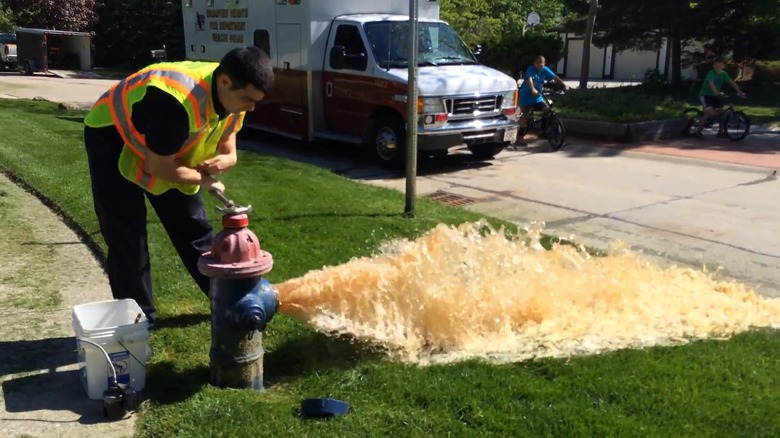
For many residents across the Bronx—from the Art Deco halls of the Grand Concourse to the multi-family homes of Pelham Bay—the sight of a city crew opening a fire hydrant is a mixed blessing. On one hand, it’s a sign of essential maintenance or a necessary safety check. On the other, it almost inevitably leads to a stressful afternoon of sputtering faucets and a gritty, brown “slug” of water in the bathtub.
The common assumption is that the city is “cleaning the pipes” and some of that dirt just happens to get into the house. While that’s partially true, the mechanical reality is much more complex. The sediment you see in your Bronx apartment isn’t just “dirt” from the street; it is a physical byproduct of how urban water systems react to sudden pressure changes. Understanding the “why” behind this grit is the best way to protect your buildings plumbing and your appliances.
The “Scouring” Effect: A Century of History Dislodged
The Bronx features some of the oldest city infrastructure in New York. Beneath the pavement lie miles of unlined cast-iron water mains, many of which were installed during the borough’s massive residential boom in the early 20th century.
Over decades of continuous service, these iron pipes develop a layer of internal oxidation known as “tuberculation.” These are jagged, coral-like mounds of iron oxide and mineral scale that grow on the inside of the pipe. Under normal conditions, the water flows smoothly over these mounds. However, when a fire hydrant is opened, the velocity of the water in the street main increases exponentially.
This is called “velocity scouring.” The sudden, high-speed rush of water acts like a pressure washer, ripping the brittle iron flakes and settled minerals off the pipe walls. Because the Bronx grid is highly interconnected, this cloud of sediment can travel several blocks away from the actual hydrant, leading to widespread water quality issues.
Why the Bronx is Uniquely Vulnerable to Sediment
While every borough deals with aging pipes, the Bronx has a specific set of variables that make hydrant flushing particularly disruptive:
- Elevation Changes: The Bronx is the hilliest borough. Moving water up and down the ridges of neighborhoods like Riverdale or University Heights requires significant pressure. When a hydrant is opened at the bottom of a hill, it can cause a “siphon effect” that pulls water—and sediment—rapidly through the pipes of buildings situated at higher elevations.
- The “Dead End” Grid: In certain parts of the East Bronx, the water grid isn’t a perfect loop. These “dead end” mains allow sediment to settle in thick layers during periods of low demand. When a hydrant is flushed, that accumulated “sludge” is finally forced into motion.
- Booster Pump Aggression: Many Bronx apartment buildings are 6 to 12 stories tall. To get water to the top floors, these buildings use powerful booster pumps. When the street pressure drops because of an open hydrant, the building’s pumps work even harder to “inhale” water from the street, effectively vacuuming the sediment into the house lines.
The “Hydrant Surge” and Your Internal Plumbing
When that sediment enters your building, it doesn’t just stay in the water; it finds places to hide. This is where most long-term damage occurs.
1. The Hot Water Tank Trap If you or your neighbors run the hot water while the street is being flushed, you are pulling that iron silt into the building’s central boiler or your individual water heater. Once sediment enters a tank, it settles at the bottom. This creates a “mud” layer that insulates the heating element, forcing the heater to work harder and eventually causing it to fail prematurely.
2. Aerator Blinding Modern faucets in renovated Bronx apartments use fine mesh screens called aerators. The “grit” from a hydrant flush is exactly the right size to clog these screens. If you notice your kitchen sink has low pressure but the shower is fine, you are likely looking at a “blinded” aerator.
3. Valve and Seal Erosion Sediment is abrasive. As it travels through your pipes, it acts like sandpaper on the rubber seals and ceramic discs inside your faucets and toilet fill valves. This is why many residents report “leaky faucets” or toilets that “run” constantly after a major neighborhood flushing event.
How to Manage a Flushing Event
The NYC Department of Environmental Protection typically performs hydrant flushing in the spring and summer. If you see crews on your block, or if you read about upcoming maintenance on our blog, follow these steps:
- Cease All Water Usage: Do not run the dishwasher, laundry, or showers while the hydrants are open.
- Wait for the “All Clear”: Once the crews have left, wait at least 30 minutes for the street mains to settle.
- The “Cold Bathtub” Flush: Go to the cold water tap in your bathtub (which usually has the highest flow rate and no fine aerator). Run the water at full blast for 10–15 minutes. This clears the “service line” between the street and your building without clogging your smaller sinks.
- Check the Aerators: If your pressure remains low, unscrew the tips of your faucets and rinse the screens. We provide a step-by-step guide on this in our faq.
Long-Term Solutions: Building Filtration
For many Bronx residents, waiting for the city to replace every 100-year-old pipe isn’t an option. Building owners and managers can mitigate the impact of hydrant flushing by installing “point-of-entry” sediment filters. These systems catch the iron flakes and grit before they can reach the building’s internal pumps and boilers.
If your building frequently suffers from brown water, it may be time to discuss a filtration upgrade with your management company. A relatively small investment in a sediment “spin-down” filter can save thousands of dollars in boiler repairs and plumbing calls.
Conclusion: A Shared Burden of History
The sediment we see after a hydrant is opened is a physical manifestation of Bronx history. It is the iron of the 1920s meeting the residential demands of the 2020s. While the city works to upgrade our city infrastructure, residents must remain vigilant.
By understanding that the discoloration is a mechanical “scouring” of the pipes rather than a sign of “dirty” source water, you can take the right steps to protect your home. If you are experiencing persistent sediment issues that don’t clear after a cold-water flush, please reach out via our contact page. We use these reports to help map the most stressed parts of the Bronx grid and provide data to the city for prioritized repairs.