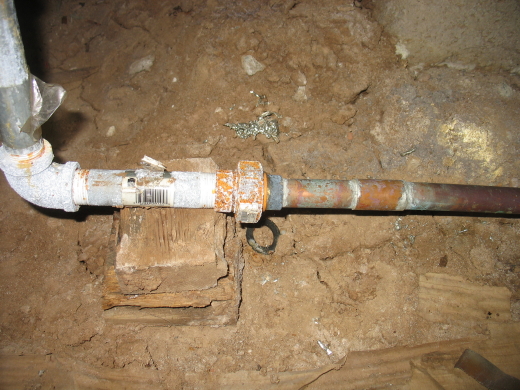
If you live in a pre-war apartment in the Heights or a classic brownstone in Bed-Stuy, you are likely living within a historical patchwork of engineering. Over the last century, as New York City evolved, so did the materials used to carry its water. However, these materials were rarely replaced all at once. Instead, decades of quick fixes and partial renovations have left many buildings with a “mixed” system—where modern copper lines are spliced directly into original galvanized steel pipes.
While this hybrid approach keeps the water flowing, it creates a specific set of chemical reactions that can fundamentally alter the flavor, smell, and clarity of your tap water. Understanding the relationship between these two metals is the first step in diagnosing chronic water quality issues that a simple pitcher filter might not be able to solve.
The Chemistry of the “Battery” Effect
To understand why your water might taste “metallic” or “bitter,” you have to look at the physics of electrolysis. When you connect a copper pipe directly to a galvanized steel pipe, you aren’t just joining two tubes; you are creating a primitive battery.
This is known as galvanic corrosion. Copper is a “noble” metal, while the zinc coating on galvanized steel is much more reactive. In the presence of water—which acts as an electrolyte—an electrical current begins to flow between the two metals. This causes the galvanized steel to sacrifice itself, corroding at an accelerated rate precisely where it meets the copper.
As the galvanized pipe breaks down, it releases a cocktail of iron, zinc, and sometimes trace amounts of lead into your drinking water. This is the primary reason why residents in older buildings plumbing often report a sharp, tinny, or “blood-like” taste, particularly after the water has been sitting in the pipes overnight.
The Tuberculation Trap: Why Flow Matters
Galvanized pipes are notorious for a process called “tuberculation.” Over fifty to eighty years, the interior of a steel pipe develops jagged, coral-like mounds of rust and mineral deposits. When a modern copper pipe is introduced into this system, the increased flow rate of the smoother copper line can create turbulence when the water hits the “craggy” interior of the old steel.
This turbulence “scours” the internal rust mounds, sending microscopic flakes of iron oxide into your glass. Even if the water leaving the city infrastructure is pristine and mountain-fresh, it picks up this “crust” as it travels the final fifty feet through your building’s walls. This results in the “morning slug” of yellow or orange water that many New Yorkers have come to accept as a normal part of city life, a topic we cover extensively in our faq.
The Bitter Zinc Aftertaste
While iron causes the reddish tint, it is the zinc from the galvanized coating that often ruins the taste of a cup of tea or coffee. Galvanized pipes are essentially steel dipped in a protective layer of zinc. As this layer dissolves due to age and the “battery effect” mentioned earlier, it imparts a distinctively bitter, medicinal, or astringent flavor to the water.
In many older Queens and Brooklyn neighborhoods, the NYC Department of Environmental Protection (DEP) treats the water to be slightly “alkaline” to prevent pipe corrosion. However, the localized chemical war between copper and steel can override these city-wide protections, leading to a flavor profile that is unique to your specific building—or even your specific apartment line.
Stagnation and the “Metallic” Peak
The impact of mixed pipes is most noticeable after “stagnation”—any period where the water hasn’t moved for several hours. This is why the first glass of water in the morning often tastes the worst.
During the night, the electrolytic reaction has hours to saturate the standing water with metal ions. If your building has a “dead leg” (a section of old galvanized pipe that was bypassed but never fully removed), water can sit there for days, slowly absorbing metallic impurities before eventually leaching back into the main flow. We often track these localized “taste spikes” in our blog as buildings undergo partial renovations.
The Hidden Health Concern: Lead Sequestration
One of the most overlooked aspects of mixed plumbing is how old galvanized pipes interact with legacy lead. Before the 1960s, it was common for the “service line” connecting a building to the urban water systems in the street to be made of lead.
As galvanized pipes corrode and develop rust mounds (tuberculation), those mounds can actually trap and “sequester” lead particles that have leached from the service line. When you renovate and add new copper pipes, the change in pressure can shake those rust mounds loose, releasing decades of trapped lead into your water. This is why the Environmental Protection Agency (EPA) recommends that if you are replacing part of your plumbing, you should ideally replace the entire line from the street to the tap to avoid this “sediment shock.”
How to Manage Mixed-Pipe Taste at Home
If you are a renter or a homeowner not yet ready for a $20,000 re-piping project, there are ways to mitigate the metallic flavor:
- The “Morning Flush”: Run your cold water for 30 to 60 seconds every morning. You are essentially clearing out the “battery-charged” water that sat in the pipes overnight.
- Dielectric Unions: If you are doing a small repair, ensure your plumber uses a “dielectric union”—a special fitting that uses a plastic spacer to keep the copper and steel from touching. This breaks the electrical circuit and slows the corrosion.
- Specific Filtration: Standard pitcher filters are great for chlorine, but to remove the heavy iron and zinc from mixed pipes, you may need a high-quality “ion-exchange” or “reverse osmosis” system.
- Temperature Control: Never use water from the hot tap for drinking or cooking. Hot water is more corrosive and “pulls” metals from the pipe walls much faster than cold water.
Conclusion: A Tale of Two Metals
The metallic taste in many NYC apartments isn’t a mystery; it’s a consequence of an aging city doing its best to stay functional through decades of patchwork repairs. The conflict between copper and galvanized steel is a invisible struggle happening behind your bathroom tiles every single day.
While the city’s city infrastructure provides world-class water to your building’s doorstep, the final journey through a mixed-metal system is where the “mountain fresh” character is often lost. By understanding the “why” behind the metallic tang, you can take better steps to protect your health and your palate.
If you’ve noticed a sudden change in your water’s flavor following a neighbor’s renovation, it could be a sign of “sediment shock” in your building’s shared lines. Please share your experience via our contact page so we can help you determine if the issue is localized or a sign of a broader infrastructure failure on your block.