New York City’s water supply is often referred to as the “champagne of tap water.” Sourced from the pristine Catskill, Delaware, and Croton watersheds, it travels through an intricate system of aqueducts to reach the five boroughs. However, as the city faces an increasing frequency of extreme weather events—from torrential “Blue Sky” flooding to record-breaking summer heatwaves—the sensory profile of our tap water is shifting.
For residents, these environmental stressors manifest at the kitchen faucet. Whether it’s a sudden “earthy” aroma after a tropical storm or a cloudy, “milky” appearance during a deep winter freeze, the weather is a primary architect of our water quality issues. Understanding how the elements interact with our urban water systems is the first step in navigating the changing nature of the city’s most vital resource.
Heavy Rainfall and the Turbidity Struggle
The most immediate impact of extreme weather on NYC water comes from heavy precipitation. When a Nor’easter or a tropical remnant dumps several inches of rain on the upstate watersheds, the result is “turbidity.”
As rainwater rushes over the steep, forested terrain of the Catskills, it picks up fine particles of clay and silt. This suspended sediment enters the reservoirs, turning the normally clear water into a cloudy, opaque mixture. While the NYC Department of Environmental Protection (DEP) utilizes massive settling basins and chemical treatments like alum to clear the water before it enters the city’s tunnels, extreme deluges can push these systems to their limit.
For the end-user, high turbidity can make the water look slightly “off-color” or hazy. While the city maintains rigorous safety standards, high sediment levels can interfere with the effectiveness of chlorine disinfection, often requiring the city to increase chlorine dosages temporarily. This leads to a secondary weather effect: the “pool-like” scent that often lingers in the air after a major storm.
The Heatwave Paradox: Thermal Gain and Algal Blooms
During NYC’s increasingly intense summer heatwaves, the challenges shift from clarity to taste. As ambient temperatures rise, so does the temperature of the water in our open-air reservoirs.
Warmer water is a breeding ground for specific types of non-toxic algae. When these organisms flourish, they release organic compounds such as geosmin and 2-methylisoborneol (MIB). The human nose is incredibly sensitive to these compounds, detecting them at concentrations of just a few parts per trillion. To a resident in Brooklyn or Manhattan, this results in water that tastes “musty,” “earthy,” or like “wet dirt.”
Furthermore, the city infrastructure itself contributes to heat-related taste changes. Water mains in New York are often buried just a few feet beneath sun-baked asphalt. During a ten-day heatwave, the soil temperature rises, warming the water inside the pipes. Warm water is less efficient at holding dissolved oxygen, which can make the tap water taste “flat” or “stale.”
Winter’s “Milky” Water: Physics, Not Chemicals
Conversely, extreme cold brings a completely different visual phenomenon. During a “Polar Vortex” event, residents frequently report that their water looks white or “milky” as it comes out of the tap.
This is almost never a chemical issue. Instead, it is a matter of cold-water physics. Cold water holds more dissolved air than warm water. As that freezing water travels from the high-pressure street mains into the relatively warm pipes of your buildings plumbing, the air begins to “bubble out” of the solution.
If you fill a glass and the cloudiness clears from the bottom up within a minute, it is simply tiny air bubbles. However, the extreme cold also puts physical stress on the brittle, century-old cast-iron mains under our streets. When the ground freezes and shifts, it can cause “pinhole” breaks or “scouring,” where internal rust is shaken loose, leading to the yellow or brown tint we often document in our blog.
Infrastructure Stress: The Impact of Flash Floods
Recent years have seen an uptick in “flash flooding” events where the city’s drainage systems are overwhelmed in minutes. While the drinking water system is pressurized (which generally keeps contaminants out), the extreme pressure of floodwaters on the exterior of the pipes can cause issues.
In neighborhoods with older buildings plumbing, flood-related vibrations and soil subsidence can cause internal pipe scale to break loose. If your building uses a basement suction tank or a rooftop gravity tank, extreme weather can introduce dust or debris into these storage units if they are not properly sealed. This can lead to localized “grit” in the water that clogs faucet aerators and showerheads, a common complaint found in our faq.
How to Manage Weather-Related Water Shifts
While you cannot control the weather in the Catskills, you can mitigate its impact on your daily glass of water:
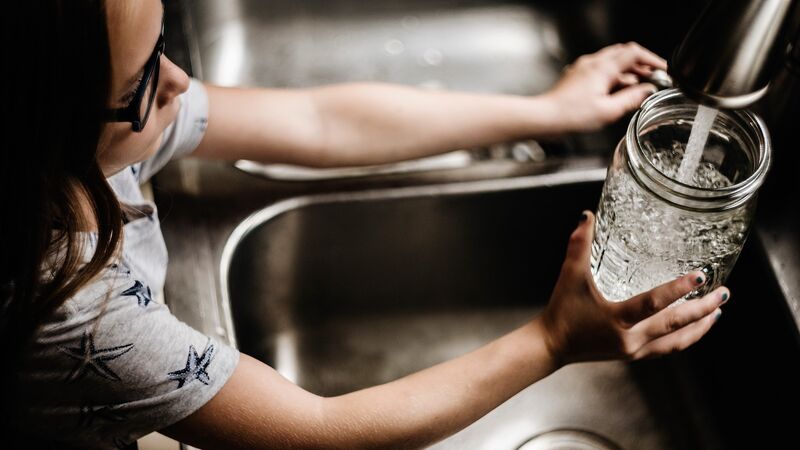
- The “Pitcher” Method: If your water tastes “earthy” due to summer algae or “chloriny” after a storm, fill a glass pitcher and leave it in the refrigerator overnight. Cold temperatures mask the earthy notes, and leaving the water uncovered for an hour allows chlorine gas to dissipate naturally.
- Aerator Maintenance: After a major rain event or a deep freeze, check the small screens on your faucets. These “aerators” often trap the fine silt and pipe scale kicked up by weather-related pressure shifts.
- Carbon Filtration: A simple activated carbon filter (like a Brita or an under-sink unit) is highly effective at removing the organic compounds (geosmin) that cause that “musty” summer taste.
- Monitor Local Alerts: Extreme weather often precedes water main repairs. Keep an eye on local city infrastructure updates to see if a brown water event on your block is due to a weather-related break.
Conclusion: A Living System
The taste and clarity of NYC water are not static; they are a living reflection of our environment. As extreme weather becomes a more frequent guest in the tri-state area, our urban water systems will continue to react in predictable, yet sometimes unappealing, ways.
By understanding the “why” behind these shifts—whether it’s the silt of a storm or the air of a freeze—residents can better manage their home’s water quality. The city’s water remains some of the safest in the world, but it is a product of nature, and nature is rarely a constant.
If you have noticed a persistent change in your water’s character following a recent storm, we want to hear about it. Your reports help us map how different neighborhoods respond to environmental stress. Reach out via our contact page to share your observations.